
When you apply for an IPO, the application amount is blocked in your bank account through a UPI mandate—it is not debited. So if you don't get an allotment, there is no separate "refund": the blocked amount is simply released back to you, usually within about a day of the allotment being finalised. The money stays in your account the whole time—it's only earmarked, not spent.
Rupeezy's role in an IPO is limited to letting you place your bid. The blocking and release of your money is handled by your bank through UPI, and allotment is decided by the IPO's registrar—Rupeezy does not control payments or allotments. So for anything to do with your money, your bank is the place to check.
What happens to my money if I don't get an allotment?
- No allotment, or a partial allotment. Your bank releases the blocked amount—or the unallotted portion—after the basis of allotment is finalised, typically within about a day. If you were allotted part of your bid, only the allotted amount is deducted for the shares credited to you, and the rest is unblocked.
- Your bank doesn't release the block early. Some banks don't lift the block immediately after allotment. In that case it stays until the UPI mandate's expiry date, after which it is released automatically. Nothing is lost—the funds are yours throughout, just held.
- Your bank actually debited the amount (rare). A few banks debit instead of blocking. If money genuinely left your account and no shares were allotted, the reversal is initiated by your bank or the sponsor bank back to the same account used to apply.
Note: Because IPO funds are blocked and not debited, you usually won't see a separate refund credit—you'll see the hold on the amount disappear instead. See What is ASBA? for how the block works.
What's the exact timing?
For a mainboard IPO, this follows the T+3 listing timeline, where "T" is the day the issue closes for bidding: the basis of allotment is finalised on T+1, and blocked amounts for applications that weren't allotted (or were only partly allotted) are released on T+2 — the same day allotted investors' shares are credited to their demat accounts, one working day before the stock lists. See How long does it take for IPOs to list on the exchange? for the day-by-day breakdown. SME IPOs may follow a different schedule.
How do I check whether my amount has been unblocked?
Open IPOs > Applied on the Rupeezy app and tap your application to see its status timeline. The Refund Date stage is checked off in green once the amount has been unblocked.
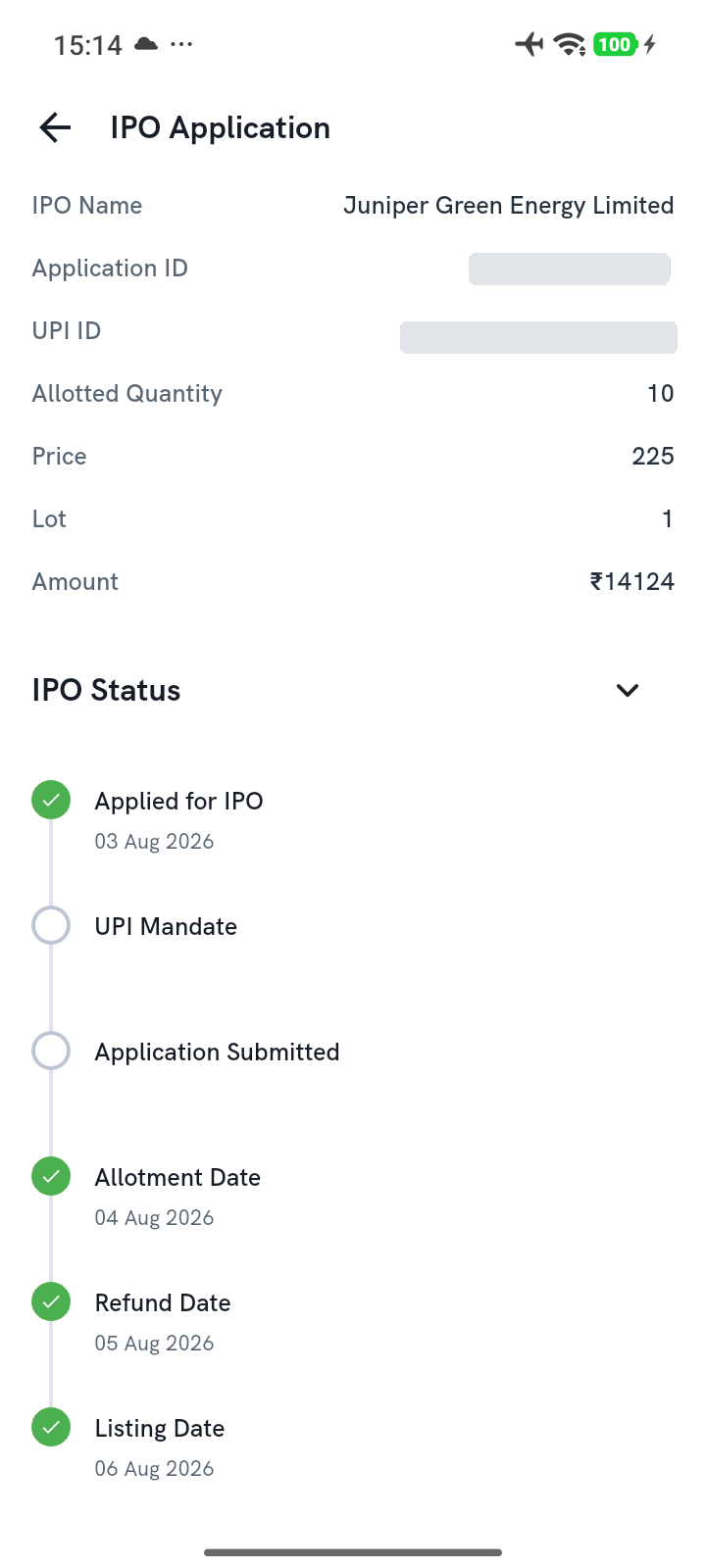
See How do I check my IPO application status? for the full walkthrough.
What should I do if my money is still blocked?
First, check the timelines above—if your bank holds blocks until mandate expiry, some wait is normal. A block or debit is handled entirely by your bank and the UPI system, so if the Refund Date has passed and an amount stays blocked well beyond the mandate's expiry, or money was debited and not returned, contact your bank:
- Ask your bank to confirm the UPI mandate status and to release any block that should already have lapsed.
- If needed, confirm the allotment outcome with the IPO's registrar — see What are Registrar and Transfer Agents (RTA)?
If your application was rejected outright (so no money was ever blocked), see Why was my IPO application rejected?. For the full sequence after you bid, see What happens after a bid for an IPO is placed?