
Enabling Stop Loss and selecting Market on the order screen already places a direct SL-M order. If you'd rather place an SL (Limit) order but still want it to fill almost as fast as SL-M, select Limit instead and set your limit price with a buffer past your trigger price — once the trigger hits, the order fires at your limit price, close enough to the market to fill almost the same way.
How to set it up
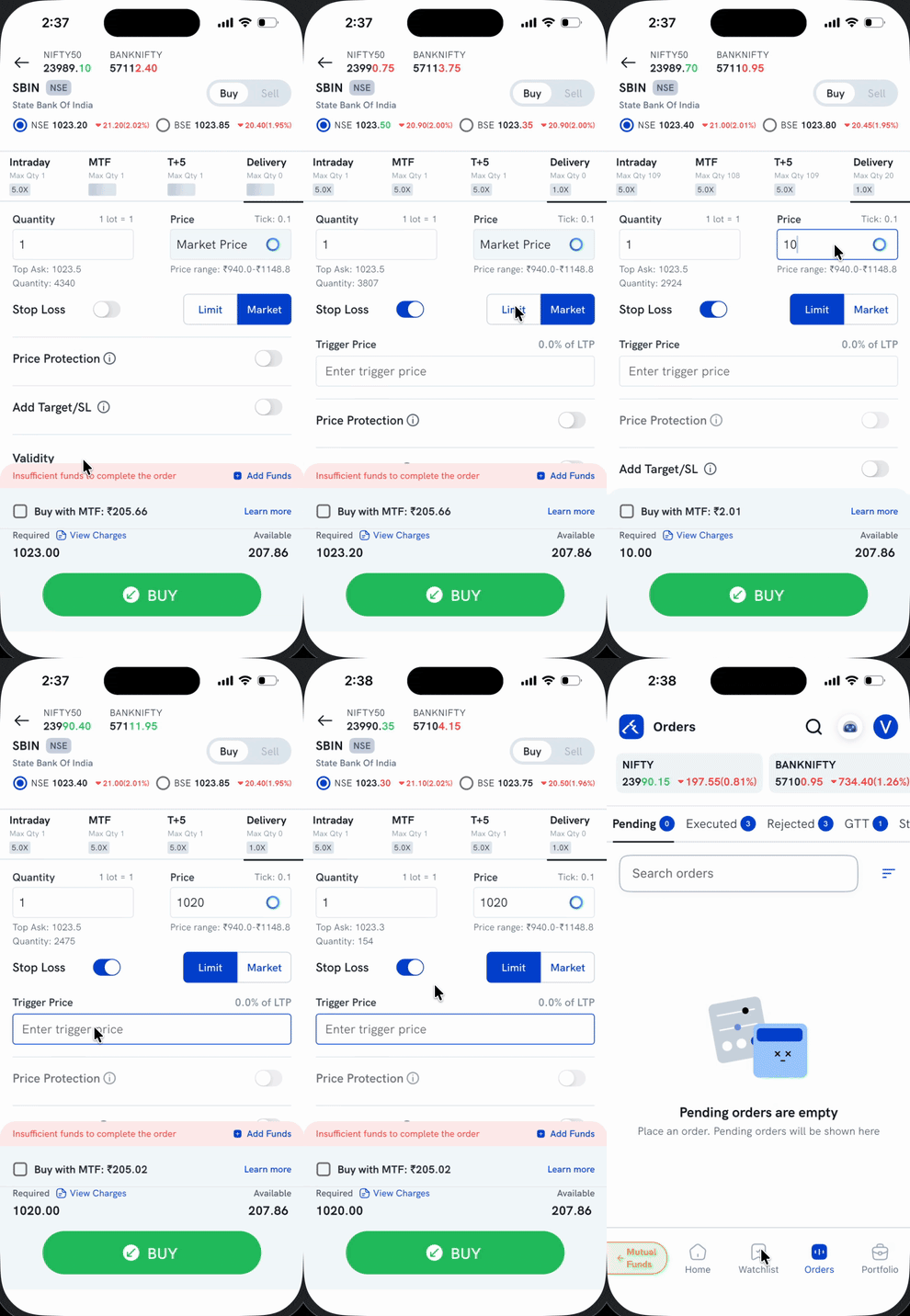
1. Open the order screen for the stock and enable the Stop Loss toggle.
2. Select Limit next to Stop Loss. Selecting Market here places a direct SL-M order — this technique is for when you'd rather use SL (Limit) and still cap your worst execution price.
3. Enter your Trigger Price — the price that releases the order.
4. Set the limit Price with a buffer past your trigger — for a BUY SL, a price a bit above your trigger; for a SELL SL, a bit below it. The wider the buffer, the closer it behaves to a guaranteed SL-M fill.
5. Place the order as usual.
Why does the buffer matter?
Once your trigger price is touched, the exchange activates an SL-M order as a Market order — it fills at whatever price is available at that moment. An SL (Limit) order instead activates as a Limit order at the price you set — it only fills at that price or better. If your limit price is right at the trigger with no room, a fast-moving price can slip past it before it fills, leaving your order open. Giving it a buffer means your limit price stays reachable even if the price moves a little further in the instant the order activates, so it fills almost as fast as SL-M would — while still capping the worst price you're willing to accept, which plain SL-M doesn't do.
Things to keep in mind
- This still isn't a guarantee — if the price gaps past your buffer entirely (for example, on a large news move), the order can stay unfilled, just like any Limit order.
- A wider buffer means a higher chance of filling but a worse worst-case price; a narrower buffer protects your price more but risks non-execution. There's no single right buffer — size it to the stock's usual volatility.