
The option chain's Last Traded Price (LTP) is the price of that specific strike's most recent trade — not a continuously updating quote. Most strikes trade far less often than the underlying stock or index, so the LTP can sit unchanged for minutes at a time, and whichever platform you happen to check it on, that "last" trade may not be the same moment. This isn't Rupeezy showing a different price from NSE — both get the trade from the same exchange.
What does the option chain look like on each platform?
Both show the same kind of view — Call and Put prices against strike price, for the underlying and expiry you pick:
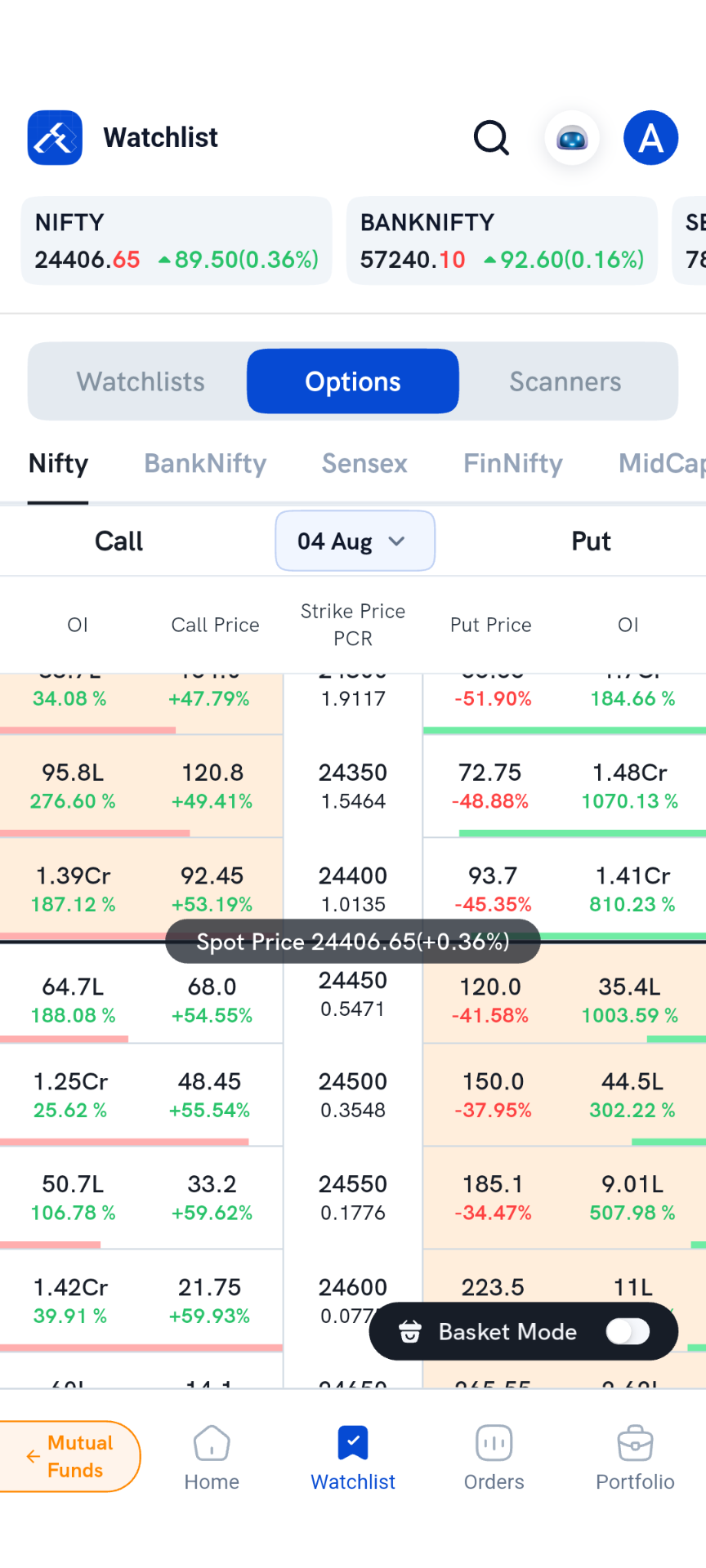
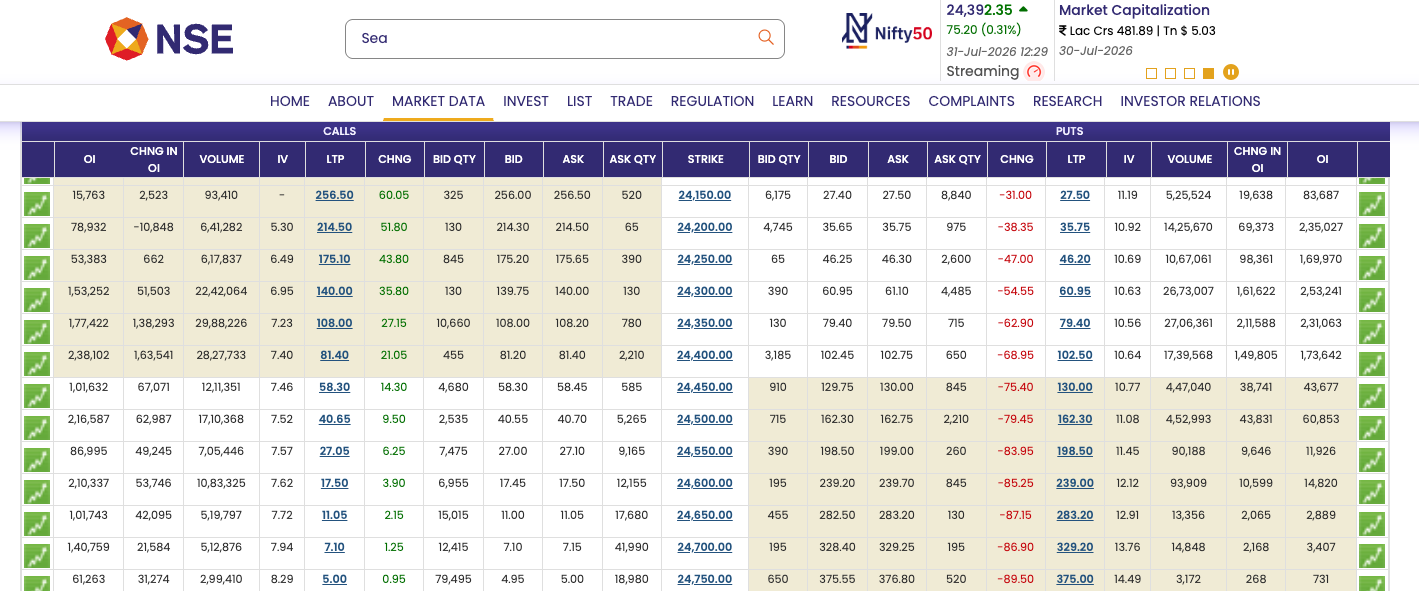
Don't try to match numbers across two screenshots taken at different moments, though — the underlying moves between any two captures, so the strikes will show different prices even with no illiquidity involved. The point these make is simply that both platforms present the same kind of Call/Strike/Put view, sourced from the same exchange.
Why does this happen more with options than with equity?
An index or a liquid stock trades almost continuously, so its LTP is nearly always fresh. An option chain, on the other hand, spreads volume across dozens of strikes and expiries for the same underlying. Only a handful of strikes near the current spot price and the current expiry see regular trading — the rest, especially deep ITM/OTM strikes and far-dated expiries, can go minutes between trades.
Because the LTP only changes when a trade happens on that exact strike, an illiquid strike's LTP can look "stuck" — and stuck at a different value than what you'd expect if you compared it with NSE at a slightly different moment, or with a strike's theoretical/fair value.
Is this a data error?
No. Rupeezy and NSE both take this LTP from the same exchange trade — there's no separate data source involved. The mismatch you're seeing is a timing effect of illiquid strikes, not two platforms disagreeing about what happened. The same mechanic applies to equity and index LTP too — see Why does the LTP not match the bids and offers in the market depth? — options just make it more visible because so many strikes trade thinly.
How do I check how stale an option's LTP is?
Check the Last Traded Time (LTT) next to the LTP on the Option Chain screen — it shows exactly when that strike last traded, so you can judge whether the LTP is a live price or one from several minutes ago.
What this means for you
- For a thinly traded strike, don't treat the LTP as "the current price" — check the bid/offer in market depth instead if you want to know what you could actually transact at right now.
- A stuck or seemingly outdated LTP on a far strike isn't a bug — it means nobody has traded that strike recently, on any platform.